

› Forums › General Melanoma Community › The Triangle of Suvival
- This topic has 15 replies, 3 voices, and was last updated 14 years, 5 months ago by
jim Breitfeller.

- Post
-
- October 11, 2011 at 6:03 pm


- Replies
-
-
- October 11, 2011 at 7:46 pm
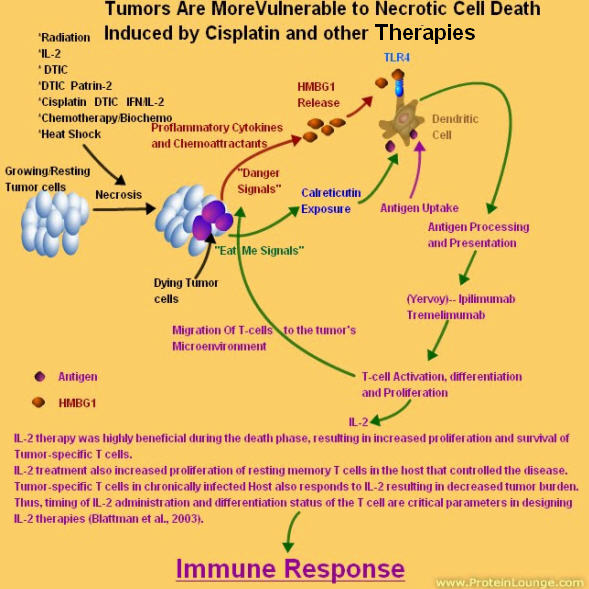
Chemotherapy induces intratumoral expression of chemokines in cutaneous melanoma, favoring T cell infiltration and tumor control,
Michelle Hong, Anne-Laure Puaux, Caleb Huang, et al.
Cancer Res Published OnlineFirst September 26, 2011.
ABSTRACT
T cell infiltration is known to impact tumor growth and is associated with cancer patient survival.
However, the molecular cues that favor T cell infiltration remain largely undefined. Here, using a
genetically-engineered mouse model of melanoma, we show that CXCR3 ligands and CCL5
synergize to attract effector T cells into cutaneous metastases, and their expression inhibits tumor
growth. Treatment of tumor-bearing mice with chemotherapy induced intra-tumoral expression
of these chemokines and favored T cell infiltration into cutaneous tumors. In melanoma patients,
these chemokines were also up-regulated in chemotherapy-sensitive lesions following
chemotherapy, and correlated with T cell infiltration, tumor control and patient survival. We
found that dacarbazine, temozolomide and cisplatin induced expression of T cell-attracting
chemokines in several human melanoma cell lines in vitro. These data identify the induction of
intra-tumoral expression of chemokines as a novel cell-extrinsic mechanism of action of
chemotherapy that results in the recruitment of immune cells with anti-tumor activity. Therefore,
identifying chemotherapeutic drugs able to induce the expression of T cell-attracting chemokines
in cancer cells may represent a novel strategy to improve the efficacy of cancer immunotherapy.
-
- October 11, 2011 at 7:46 pm
Chemotherapy induces intratumoral expression of chemokines in cutaneous melanoma, favoring T cell infiltration and tumor control,
Michelle Hong, Anne-Laure Puaux, Caleb Huang, et al.
Cancer Res Published OnlineFirst September 26, 2011.
ABSTRACT
T cell infiltration is known to impact tumor growth and is associated with cancer patient survival.
However, the molecular cues that favor T cell infiltration remain largely undefined. Here, using a
genetically-engineered mouse model of melanoma, we show that CXCR3 ligands and CCL5
synergize to attract effector T cells into cutaneous metastases, and their expression inhibits tumor
growth. Treatment of tumor-bearing mice with chemotherapy induced intra-tumoral expression
of these chemokines and favored T cell infiltration into cutaneous tumors. In melanoma patients,
these chemokines were also up-regulated in chemotherapy-sensitive lesions following
chemotherapy, and correlated with T cell infiltration, tumor control and patient survival. We
found that dacarbazine, temozolomide and cisplatin induced expression of T cell-attracting
chemokines in several human melanoma cell lines in vitro. These data identify the induction of
intra-tumoral expression of chemokines as a novel cell-extrinsic mechanism of action of
chemotherapy that results in the recruitment of immune cells with anti-tumor activity. Therefore,
identifying chemotherapeutic drugs able to induce the expression of T cell-attracting chemokines
in cancer cells may represent a novel strategy to improve the efficacy of cancer immunotherapy.
-
- October 14, 2011 at 1:40 am
Who benefits? Anybody who wishes to educate themselves. To try and understand the pathway of melanoma helps some people cope – whether being diagnosed with it, or as a caregiver. I, for one, will forever be thankful for Jimmy's and other's posts that help me understand the molecular reasoning behind a disease which I, personally, have no control over.
Knowledge is power – regardless of the outcome.
Maria
-
- October 14, 2011 at 1:40 am
Who benefits? Anybody who wishes to educate themselves. To try and understand the pathway of melanoma helps some people cope – whether being diagnosed with it, or as a caregiver. I, for one, will forever be thankful for Jimmy's and other's posts that help me understand the molecular reasoning behind a disease which I, personally, have no control over.
Knowledge is power – regardless of the outcome.
Maria
-
- October 14, 2011 at 3:57 pm
What is your problem? Why don't you take one of these graphics and research it. You might learn something that can save your life. Scientists don't have the time to read all the research papers that are published each day.
If you don't like the post from Jimmy, just don't read it , skip it. Others have taken jimmy's information to their oncologists and were able to set a plan forward for their treatment,
"THank you Jimmy. Bob is hanging in…feeling a bit better emotionally. We continue to bless you for having helped Bob to live more than 2 1/2 years from a grim diagnosis of 2 weeks – 2 months. You are one of our heros."
He is doing this forum a great service.
-
- October 14, 2011 at 3:57 pm
What is your problem? Why don't you take one of these graphics and research it. You might learn something that can save your life. Scientists don't have the time to read all the research papers that are published each day.
If you don't like the post from Jimmy, just don't read it , skip it. Others have taken jimmy's information to their oncologists and were able to set a plan forward for their treatment,
"THank you Jimmy. Bob is hanging in…feeling a bit better emotionally. We continue to bless you for having helped Bob to live more than 2 1/2 years from a grim diagnosis of 2 weeks – 2 months. You are one of our heros."
He is doing this forum a great service.
-
- October 14, 2011 at 3:57 pm
What is your problem? Why don't you take one of these graphics and research it. You might learn something that can save your life. Scientists don't have the time to read all the research papers that are published each day.
If you don't like the post from Jimmy, just don't read it , skip it. Others have taken jimmy's information to their oncologists and were able to set a plan forward for their treatment,
"THank you Jimmy. Bob is hanging in…feeling a bit better emotionally. We continue to bless you for having helped Bob to live more than 2 1/2 years from a grim diagnosis of 2 weeks – 2 months. You are one of our heros."
He is doing this forum a great service.
-
- October 14, 2011 at 1:40 am
Who benefits? Anybody who wishes to educate themselves. To try and understand the pathway of melanoma helps some people cope – whether being diagnosed with it, or as a caregiver. I, for one, will forever be thankful for Jimmy's and other's posts that help me understand the molecular reasoning behind a disease which I, personally, have no control over.
Knowledge is power – regardless of the outcome.
Maria
-
- October 11, 2011 at 7:46 pm
Chemotherapy induces intratumoral expression of chemokines in cutaneous melanoma, favoring T cell infiltration and tumor control,
Michelle Hong, Anne-Laure Puaux, Caleb Huang, et al.
Cancer Res Published OnlineFirst September 26, 2011.
ABSTRACT
T cell infiltration is known to impact tumor growth and is associated with cancer patient survival.
However, the molecular cues that favor T cell infiltration remain largely undefined. Here, using a
genetically-engineered mouse model of melanoma, we show that CXCR3 ligands and CCL5
synergize to attract effector T cells into cutaneous metastases, and their expression inhibits tumor
growth. Treatment of tumor-bearing mice with chemotherapy induced intra-tumoral expression
of these chemokines and favored T cell infiltration into cutaneous tumors. In melanoma patients,
these chemokines were also up-regulated in chemotherapy-sensitive lesions following
chemotherapy, and correlated with T cell infiltration, tumor control and patient survival. We
found that dacarbazine, temozolomide and cisplatin induced expression of T cell-attracting
chemokines in several human melanoma cell lines in vitro. These data identify the induction of
intra-tumoral expression of chemokines as a novel cell-extrinsic mechanism of action of
chemotherapy that results in the recruitment of immune cells with anti-tumor activity. Therefore,
identifying chemotherapeutic drugs able to induce the expression of T cell-attracting chemokines
in cancer cells may represent a novel strategy to improve the efficacy of cancer immunotherapy.
-


- You must be logged in to reply to this topic.